


News
Bayou Region Leaders Take Regional Priorities to Washington, D.C.



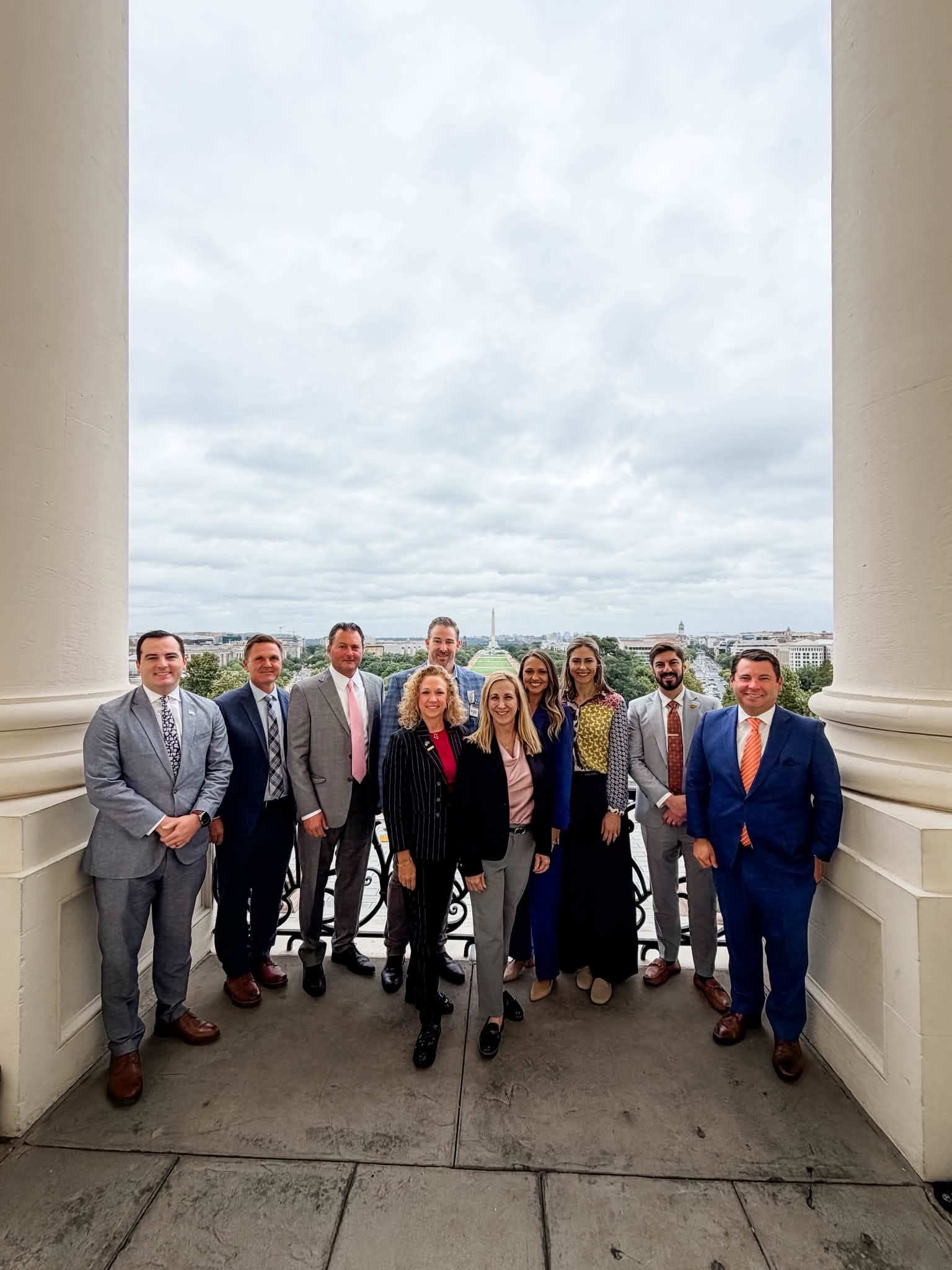
WASHINGTON, D.C. — September 23, 2026 — Leaders from across the Bayou Region traveled to Washington, D.C., September 22–23 to advocate for the policies and investments that will strengthen the region’s economy, support its workforce, and protect the communities that power Louisiana’s energy, maritime, and industrial sectors.
The South Central Industrial Association (SCIA) joined the Atchafalaya Intracoastal Coalition (AIC), COLAB, and the Louisiana Mid-Continent Oil & Gas Association (LMOGA) for the Washington, D.C. Fly In, bringing a unified Bayou Region voice to federal policymakers.
Together, the organizations focused their discussions on three interconnected priorities: a strong offshore energy industry, meaningful flood insurance reform, and workforce development.
“These issues are not separate—they are deeply connected,” said Hillary Charpentier, Executive Director of SCIA. “A strong offshore energy industry supports thousands of jobs and drives our regional economy. Those industries need a skilled workforce to remain competitive, and our workers need affordable housing and flood insurance to be able to live and build their futures in the communities they call home.”
SCIA represents more than 250 companies and approximately 250,000 employees serving the oil, gas, and marine industries throughout the region. The organization’s federal advocacy efforts are focused on advancing policies that support American energy production, infrastructure, workforce development, levee protection, and coastal restoration.
Supporting a Strong Offshore Energy Industry
Offshore energy remains a cornerstone of the Bayou Region economy and an important component of America’s energy security. The Gulf of America produces nearly all of the nation’s offshore oil and natural gas and supplies roughly 15 percent of domestic crude oil production.
The Bayou Region has built and sustained this industry for generations, from Port Fourchon’s deepwater operations to the shipyards and marine businesses supporting the next generation of vessels for the U.S. military.
During the D.C. fly-in, regional leaders urged continued federal policies that encourage investment and growth in the Gulf, including support for the Department of the Interior’s Five-Year Plan to expand offshore leasing access and encourage exploration and new production.
The group also brought forward several priorities for the region’s ports and waterways, including:
- Expediting permitting for Port Fourchon Island development.
- Including Phase 2 of the Port Fourchon channel deepening project in WRDA 2028.
- Supporting the Argent LNG project through the FERC process.
- Maintaining the federally authorized Atchafalaya River and Bayous Chene, Boeuf, and Black at their authorized dimensions to support LNG and oil and gas activity.
- Supporting a “New Start” designation for the deepening of the Houma Navigational Canal.
These investments are about more than individual projects—they are about maintaining the infrastructure and access necessary for the Bayou Region to continue supporting American energy production, maritime commerce, and national security.
Calling for Flood Insurance Reform
Flood insurance was another major focus of the conversations in Washington.
Louisiana’s unique geography and flood risk make affordable and effective flood insurance critical to the long-term health of its communities. Regional leaders raised concerns with FEMA’s Risk Rating 2.0 methodology and its impact on homeowners and working families across the state.
Rising flood insurance costs are increasingly affecting whether workers can afford to live in the communities where they work—creating consequences that extend well beyond individual homeowners.
The group urged the Administration to direct FEMA to revert Louisiana’s flood insurance pricing from Risk Rating 2.0 to the legacy rating methodology while Louisiana transitions toward a private flood insurance market.
For the Bayou Region, flood insurance reform is ultimately an economic and workforce issue as much as it is a housing issue. If workers cannot afford to live in the communities that support the energy, maritime, seafood, and industrial sectors, those industries face an increasingly difficult workforce challenge.
Investing in the Workforce of Tomorrow
The third priority brought to Washington was workforce development.
The Bayou Region’s energy, defense, and maritime industries depend on a trained workforce capable of filling highly skilled positions across the region. Fletcher Technical Community College and Nicholls State University are already preparing students for these careers, including offshore safety, maritime licensing, and skilled trades.
Regional leaders emphasized the need for continued federal support to help technical colleges and universities expand their ability to recruit and train workers.
The group also advocated for two workforce development requests at Fletcher that remain in the federal appropriations process: $1.7325 million for robotic welding training and $1.5 million for aviation maintenance training. Both requests cleared the House Appropriations Committee in June, while the Senate had not yet marked up its FY2027 Labor-HHS bill at the time of the fly-in.
These investments represent an opportunity to connect students with high-demand careers while helping regional employers build the workforce they need to remain competitive.
A Unified Regional Voice
While offshore energy, flood insurance, and workforce development may appear to be separate policy issues, Bayou Region leaders emphasized that they are fundamentally interconnected.
A thriving energy and maritime economy creates jobs and economic opportunity. Those industries require a skilled workforce. And workers need affordable housing, infrastructure, and flood insurance to remain in the communities where those jobs are located.
The D.C. group also carried several additional regional priorities, including Early Head Start access in Lafourche Parish, funding for Morganza-related flood protection and the Gulf Intracoastal Waterway flood gates, and federal support for the Atchafalaya River Coastal Hub in Morgan City.
By bringing these priorities directly to federal policymakers, SCIA and its regional partners continue to ensure that the needs of South Louisiana are represented in the decisions being made in Washington.
The Bayou Region is not simply asking Washington to invest in our communities—we are demonstrating why those investments matter to the entire country. From energy and maritime commerce to national defense, workforce development, and coastal resilience, the people and industries of South Louisiana play a vital role in keeping America moving forward.